
Walk into any store that sells safes, and you will find a wall of options ranging from a few hundred dollars to several thousand, each one promising to be the most secure, the most fireproof, or the most technologically advanced. The marketing can make it genuinely difficult to separate meaningful features from ones that exist primarily to justify a higher price tag. Knowing which safe features actually translate to better protection helps you spend your money where it counts.
Steel Gauge and Body Construction
The single most important physical attribute of any safe is the thickness and quality of the steel used to build it. Steel gauge is measured counterintuitively, meaning a lower gauge number indicates thicker steel. Most entry-level safes use 12- to 14-gauge steel, which can be defeated with basic power tools in a matter of minutes, whereas higher-quality safes use 10-gauge or thicker steel for the body and door.
The door itself deserves particular attention, since it is the primary target for forced entry. A solid steel door with a thickness of at least half an inch, combined with robust hinge protection, creates a meaningful barrier that casual thieves are unlikely to get through quickly. Some manufacturers advertise composite doors or doors with added layers of material to increase pry resistance, which is worth looking for in safes at the mid-range price point and above.
Locking Bolt Diameter and Count
The locking bolts on a safe are what physically hold the door closed against the frame, and their size and number directly affect how resistant the safe is to prying and pulling attacks. Bolts that are at least one inch in diameter provide substantially more resistance than thinner bolts, and a safe with bolts on three or four sides of the door is harder to defeat than one with bolts only on a single side. Active bolts, which move when the locking mechanism is engaged, are more secure than dead bolts that remain in a fixed position.
One thing to watch for is how manufacturers count their bolts in marketing materials. Some advertise a high bolt count but include fixed or dummy bolts that do not actually move and provide little real security. When evaluating a safe, focus on the number of active locking bolts and their diameter rather than the total bolt count printed on the product description.
Fire Rating: What the Numbers Mean
A fire rating tells you how long a safe can maintain an internal temperature below a certain threshold when exposed to a standard fire test. The most common rating for document and firearm safes is 30 minutes at 1,200 degrees Fahrenheit, which reflects the temperature and duration of a typical residential house fire. Higher-end safes carry ratings of 60 minutes or more, and some are tested at higher temperatures to simulate more intense fire conditions.
The threshold that matters most for paper documents is 350 degrees Fahrenheit, which is the temperature at which paper begins to char and ignite. For digital media like hard drives and USB drives, the threshold is much lower, around 125 degrees Fahrenheit, which means a standard fire-rated safe may not be sufficient to protect electronics. If protecting digital media matters to you, look for safes with a specific media rating in addition to the standard fire rating.
Lock Type and Reliability
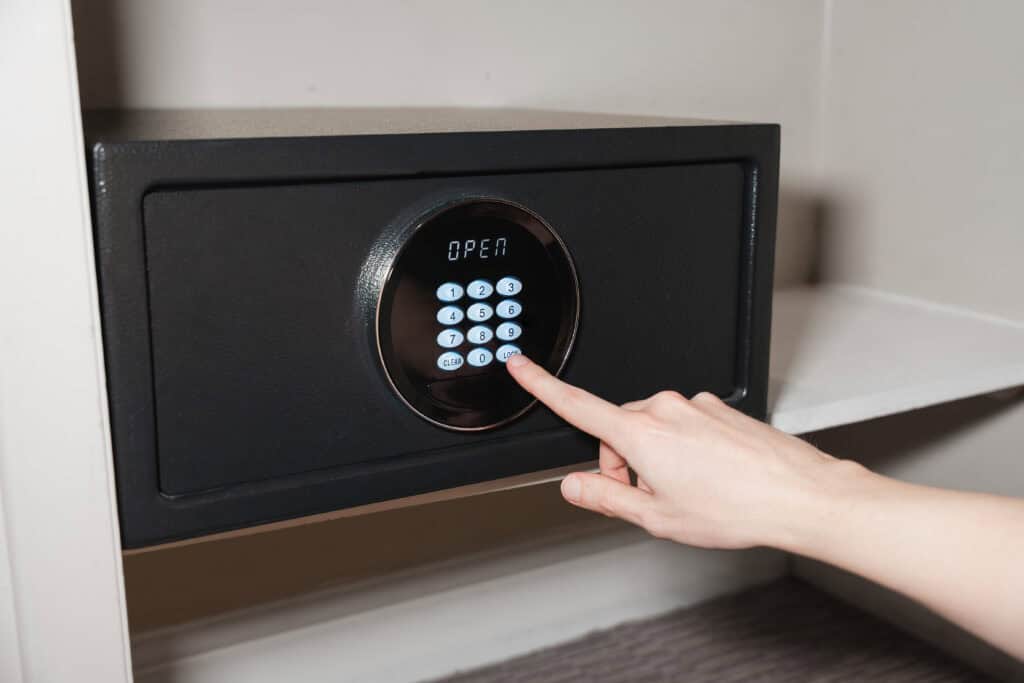
The type of lock on a safe affects both security and convenience, and the right choice depends on how you plan to use it. Electronic keypad locks offer quick access and eliminate the need to carry a key, making them popular for home defense safes where fast access is a priority. Mechanical combination locks are slower to open but require no batteries and have no electronic components that can fail.
Biometric locks, which open using a fingerprint scan, have improved significantly in recent years and are now a reliable option for many buyers. The main consideration with biometrics is ensuring the scanner can read your fingerprint reliably under different conditions, including dry skin, minor cuts, or stress-related changes in blood flow that can affect how your finger presents to the sensor. Whatever lock type you choose, look for one that has been independently tested and certified by a recognized organization such as Underwriters Laboratories.
Pry Resistance and Anti-Tamper Design
A safe’s resistance to prying is determined by the combination of steel thickness, bolt strength, and the design of the door-to-frame interface. Safes with a recessed door, where the door sits inside the frame rather than flush against the outside, are inherently harder to pry because there is less surface area for a tool to grip. Some manufacturers also add anti-pry tabs or plates around the door perimeter that create additional contact points between the door and frame.
The hinges are another point of vulnerability that varies widely between models. External hinges, while not necessarily a security weakness if designed correctly, should be evaluated for whether they can be defeated by cutting. Many quality safes are designed so that even if the hinge is compromised, the locking bolts on the hinge side of the door prevent it from being opened, which is a detail worth confirming before you buy.
Interior Organization and Capacity
A safe that is difficult to use is a safe that gets used less carefully, so interior organization matters more than it might initially seem. Adjustable shelving, door-mounted pockets, and dedicated long gun racks allow you to configure the interior to match what you are actually storing rather than forcing your valuables to fit around a fixed layout. A well-organized safe also makes it easier to do a quick visual inventory, so you know immediately if anything is out of place.
Capacity is frequently overstated in manufacturer specifications, particularly for gun safes. A safe advertised as holding a certain number of rifles is often measured without scopes, and practical capacity with real-world configurations is typically lower. When evaluating capacity, look for reviews from actual owners using similar configurations to your own, and when in doubt, buy one size larger than you think you need. Running out of space in a safe tends to lead to shortcuts in storage habits that undermine the security you invested in.
Let Us Help!
North American Safe assists customers with repairs, lock changes, and relocations. When it comes to safes, we are here to help in any way we can. Contact us today with any questions you may have!