
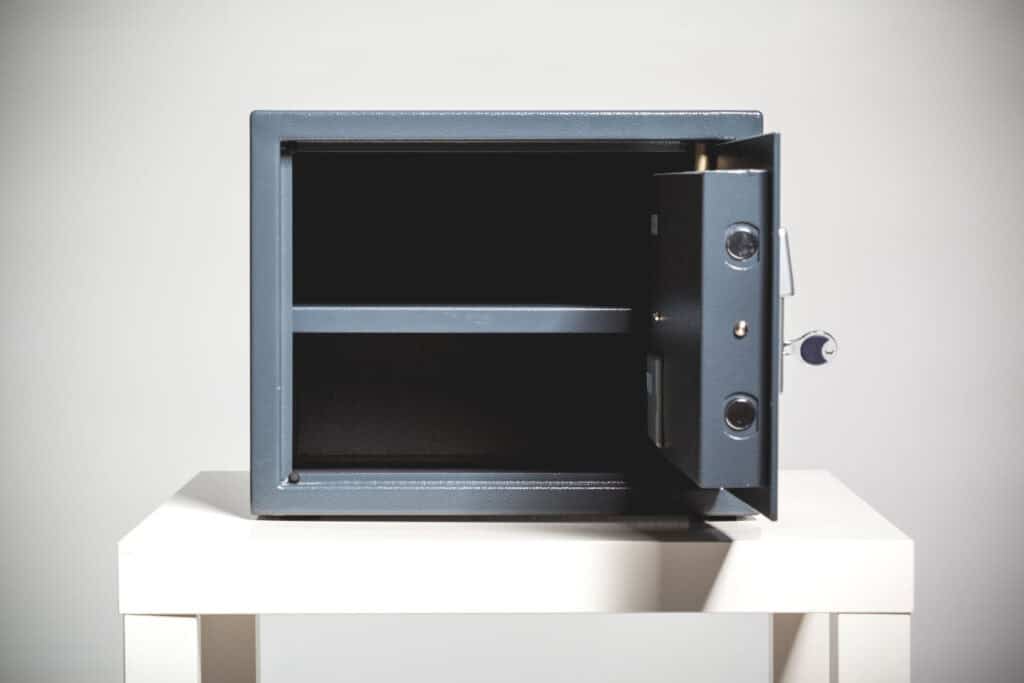
When you invest in a quality safe, the next question is how to install it, and that decision matters more than most people realize. A safe that is not anchored to your home can be carried out the door in a matter of minutes, defeating the entire purpose of owning one. Whether bolting down is right for you depends on your living situation, the size of your safe, and how you plan to use it.
The Case for Bolting Down a Safe
A bolted safe is exponentially harder to steal than one that simply sits on the floor. Burglars who encounter a safe they cannot open on the spot will often attempt to take it with them and work on it elsewhere. Anchoring your safe to a concrete floor or wooden subfloor using the bolt-down holes that most quality safes come equipped with removes that option entirely, forcing any would-be thief to abandon it.
Beyond theft prevention, bolting a safe down also improves stability in everyday use. Heavy, unanchored safes can shift or tip when the door is opened repeatedly, especially on hard flooring. A properly anchored safe stays exactly where you put it, which is safer for the people using it and better for the safe’s integrity over time.
The Limitations of Free-Standing Safes
A free-standing safe is not without its merits, but it does carry real vulnerabilities that should not be overlooked. Even a safe that weighs several hundred pounds can be tipped onto a dolly and removed from a home by two people working together. Burglars who select a home in advance may know the safe is there and come prepared with the tools and manpower to move it.
Free-standing installation does offer flexibility, particularly for renters or people who move frequently and cannot or do not want to drill into their floors. In these situations, placing a heavy safe in a corner, against a wall, or in a closet can make it more difficult to maneuver out of the home. That said, none of these positioning strategies provides the same level of security as a properly anchored installation.
What Bolting Actually Involves
Anchoring a safe is a straightforward process for most installations, though it does require some planning. Most quality safes include pre-drilled anchor holes in the floor of the unit, and the manufacturer typically provides the hardware needed to complete the installation. For concrete floors, you will need a masonry bit and concrete anchors; for wood subfloors, heavy-duty lag bolts driven into the joists provide a solid hold.
The main concern for most homeowners is the permanence of the installation. Drilling into a concrete floor or subfloor is not easily undone, which is why it is worth choosing your safe’s location carefully before you commit. A corner in a bedroom closet, a utility room, or a basement corner are all common placements that keep the safe out of high-traffic areas while still being accessible to the people who need it.
Weight as a Factor in Security
Heavier safes are more resistant to theft regardless of whether they are anchored, but weight alone is not a substitute for proper installation. A safe that weighs 500 pounds is more difficult to move than one that weighs 100, but given enough time and the right equipment, even a very heavy free-standing safe can be relocated. Weight slows thieves down; anchoring stops them.
That said, weight does become a more meaningful factor in specific scenarios. In an apartment on an upper floor where drilling into a concrete slab is not an option, a heavier safe combined with strategic placement provides a reasonable level of protection. For homeowners on a slab foundation with a concrete garage floor or basement, anchoring is almost always the better choice and takes only a modest amount of effort to accomplish.
Which Option Is Right for Your Home?
For most homeowners with a permanent residence, bolting down a safe is the clearly superior choice. The investment of time and a few hardware dollars provides a significant security upgrade that cannot be replicated by any amount of careful positioning. If your safe is in a location you plan to keep it long-term, anchoring it should be considered a standard part of the installation, not an optional extra.
Renters and those who move frequently are in a genuinely different situation where free-standing placement may be the only practical option. In those cases, choosing the heaviest safe your floor can support, placing it in a low-visibility location, and adding secondary security measures like a monitored alarm system can help compensate for the lack of anchoring. The goal in either scenario is to make your safe as difficult as possible to remove, and bolting it down remains the most effective single step you can take toward that goal.
Let Us Help!
North American Safe assists customers with repairs, lock changes, and relocations. When it comes to safes, we are here to help in any way we can. Contact us today with any questions you may have!