
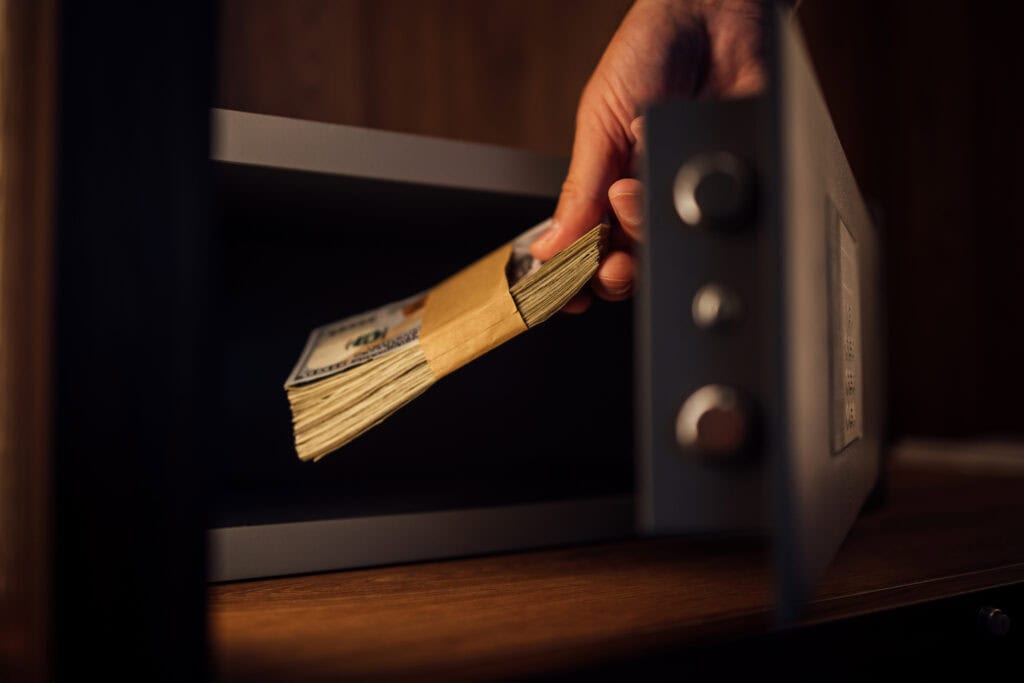
A fireproof safe protects more than firearms. It’s often where a household keeps the documents and valuables that would be hardest to replace after a fire or break-in. Knowing what actually belongs inside makes the difference between a safe that earns its keep and one that’s just an expensive box collecting the wrong items. That said, here is what you should store in a fireproof safe!
What Belongs in a Fireproof Safe
Start with the items that are difficult or impossible to replace:
- Birth certificates, Social Security cards, and passports
- Property deeds, wills, and powers of attorney
- Insurance policies and recent tax records
- Marriage certificates and adoption papers
- Jewelry, heirlooms, and other small valuables
- Firearms and firearm accessories
These items share a common thread. They’re either legally important, financially important, or personally irreplaceable, and none of them need to be accessed daily. That last quality matters, since keeping a safe closed as much as possible is part of what keeps it secure.
What You Shouldn’t Store in a Fireproof Safe
Not everything belongs in a fire-rated safe, even if it seems like a natural fit:
- Items you need to access frequently, since opening a safe often increases the odds it gets left ajar or unlocked
- Cash you may need on short notice, since a locked safe isn’t a substitute for an accessible emergency fund
- Digital media and backup drives, unless the safe is specifically rated for media protection at a lower internal temperature than paper
- Anything already damp, since trapped moisture inside a sealed safe has nowhere to go
That last point surprises many homeowners. The same seal that fireproofs the safe can trap humidity during normal daily use. For digital backups specifically, cloud storage or an external drive kept in a media-rated safe is a better option than a standard document and firearm safe, since standard fire ratings are calibrated for paper, not electronics. It’s also worth thinking twice before storing anything with a battery inside for long periods, since a leaking battery can damage nearby documents or valuables just as easily as moisture can.
Finding the Best Safe for Documents
Paper starts to char and become unreadable at temperatures well below what many people expect, which is why document protection depends on more than just calling a safe “fireproof.” Look for a safe rated to keep interior temperatures below 350 degrees Fahrenheit, since that’s the threshold that actually protects paper during a house fire.
It’s worth separating two different needs here. A gun safe is built primarily around physical security, thick steel, and strong locking bolts, with fire protection as an important but secondary feature. A dedicated document or media safe is usually smaller and built primarily around a tight fire rating, with less emphasis on burglary resistance. If firearms are the main priority, Liberty’s fire-rated models list a specific fire rating for each safe, so it’s easy to choose one that also protects documents well. If documents alone are the priority and space or budget is limited, a smaller dedicated fire safe built specifically for paper protection may be a better fit than a full-size gun safe.
A fireproof document holder, the kind of zippered pouch or accordion folder sold for organizing paperwork, is a useful addition inside a safe but not a replacement for one. These holders keep documents organized and add a layer of protection against dust and minor spills, but they aren’t tested to withstand fire. Pairing an organized document holder with a properly rated safe covers both organization and real protection, making it much faster to find what you need during a stressful moment, like filing an insurance claim after a loss.
Managing Moisture Inside the Safe
A tightly sealed safe protects against fire, but that same seal can allow humidity to build up inside over time, especially in basements or garages where many safes are installed. Trapped moisture can warp documents, tarnish jewelry, and cause rust on firearms stored alongside paperwork. Once that damage starts, it’s difficult to reverse.
A renewable dehumidifier like the Eva-Dry is a simple way to manage that risk. It requires no batteries or cords, absorbs moisture from the air inside the safe, and can be recharged and reused rather than replaced. Adding one is a small step that protects the same items a fireproof safe is meant to keep safe in the first place, and it’s inexpensive compared to the cost of replacing water-damaged documents or valuables.
Learn More About Fire Ratings
Choosing the right level of fire protection depends on understanding what a fire rating actually measures and how it compares to burglary protection. Our guide on fire protection vs. burglary protection breaks down what each rating means and how to weigh the two.
Get the Right Safe for What You’re Protecting
The right fireproof safe depends on what you’re storing and where it will be installed. Our team can help you compare fire-rated Liberty models and choose accessories, like a dehumidifier, that keep your safe working as it should. Contact us or visit our Wakarusa showroom to get started.