
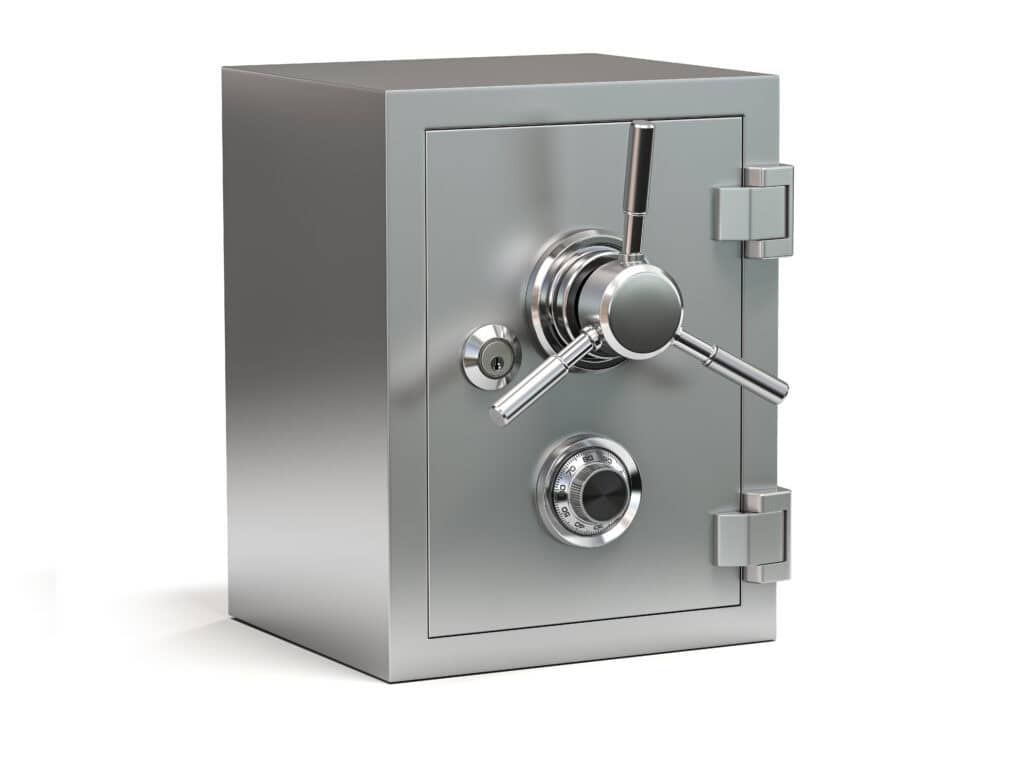
Safes are built to resist force, fire, and theft, which also makes them incredibly difficult to relocate. Before you attempt to shift thousands of pounds of reinforced steel, it is important to understand what professional safe moving truly involves.
Why Moving a Safe Is Different From Moving Furniture
A safe is engineered to stay exactly where it is placed. Many residential gun safes weigh several hundred pounds, while larger models can exceed a thousand pounds. That weight is concentrated in a tall, narrow structure with a heavy door, which creates a high center of gravity and significant tipping risk during movement.
Unlike a couch or appliance, a safe cannot simply be slid across a floor or strapped to a standard dolly without consequences. Improper handling can damage flooring, crack tile, scar hardwood, and strain staircases. More importantly, it can injure the people attempting the move and compromise the internal components that provide fire and burglary protection.
The Hidden Risks of Improper Safe Relocation
When people think about how to move a safe, they often focus on strength. In reality, strength is the least important factor. Control, balance, weight distribution, and equipment rating matter far more than muscle.
Dragging or tipping a safe without the right tools can shift fireboard layers, misalign the door, or stress the locking mechanism. Even minor structural shifts can affect how the bolts engage or how the seal performs during a fire event. What looks like a successful move on the outside can quietly reduce the safe’s long-term performance.
The Equipment Required for Professional Safe Moving
True safe relocation requires specialized equipment designed specifically for heavy security units. Commercial-grade dollies rated for high weight capacities are essential, along with load distribution systems that protect finished floors and stair surfaces. Strapping systems must secure the safe tightly while still allowing precise control during inclines and turns.
Stair navigation is where professional equipment becomes critical. Controlled descent systems and reinforced moving platforms help prevent sudden weight shifts that can cause loss of control. This is not general household moving gear. It is purpose-built equipment for moving reinforced steel safely and precisely.
Structural Planning Before the First Inch Moves
Before a safe is moved, access points must be evaluated carefully. Doorway widths, ceiling clearances, hallway turns, stair pitch, and flooring materials all play a role in determining the safest route. Professional relocation begins with planning, not lifting.
Anchoring also must be addressed. Most safes are secured to concrete or reinforced framing to prevent tipping and theft. Those anchors must be removed properly and reinstalled at the new location to maintain the safe’s intended level of protection. Skipping this step leaves the safe vulnerable and unstable.
Professional Relocation Protects Your Investment
A safe is not just heavy steel. It is a long-term investment in security, privacy, and preparedness. Moving it incorrectly can damage not only the safe itself but also the structure of your home.
In the middle of a relocation project, this is where North American Safe stands apart. With specialized equipment and regional relocation services across northern Indiana and southern Michigan, the team approaches each move with a clear plan and the right tools for the job. The focus is not simply on transportation but on preserving the integrity of the safe and the property it protects.
Reinstallation and Reanchoring Done Right
Once the safe reaches its new position, the job is not complete. Proper leveling ensures the door swings correctly and the locking bolts engage fully. An uneven installation can create long-term stress on hinges and internal components.
Reanchoring restores the safe’s resistance to tipping and removal. Concrete anchoring, when available, provides the strongest foundation. In wood-framed environments, reinforcement strategies may be necessary to ensure stability. Professional relocation includes these final steps so the safe performs exactly as it was designed to perform.
When Safe Moving Becomes Essential
There are several situations where safe relocation becomes unavoidable. Home renovations, flooring upgrades, basement finishing projects, and full residential moves all require the safe to be repositioned. In each case, timing and coordination are critical to avoid construction damage or unnecessary risk.
Even moving a safe within the same room can present challenges if the flooring surface changes or if anchoring must be adjusted. Professional movers evaluate each scenario carefully, ensuring that the safe is transitioned smoothly from one secure position to another without compromise.
Confidence Through Professional Handling
If you are researching how to move a safe, you are already taking the right first step by gathering information. The next step is recognizing that professional handling dramatically reduces risk and protects your investment.
North American Safe provides professional safe relocation services designed specifically for heavy gun safes and residential security units. With the right equipment, the right planning, and the right experience, your safe can be moved efficiently and reinstalled with full confidence when it is time to relocate your safe. Trust the professionals who treat your security with the seriousness it deserves.
Let Us Help!
North American Safe assists customers with repairs, lock changes, and relocations. When it comes to safes, we are here to help in any way we can. Contact us today with any questions you may have!